
Original: $520.00
-70%$520.00
$156.00The Story
Xenosmilus
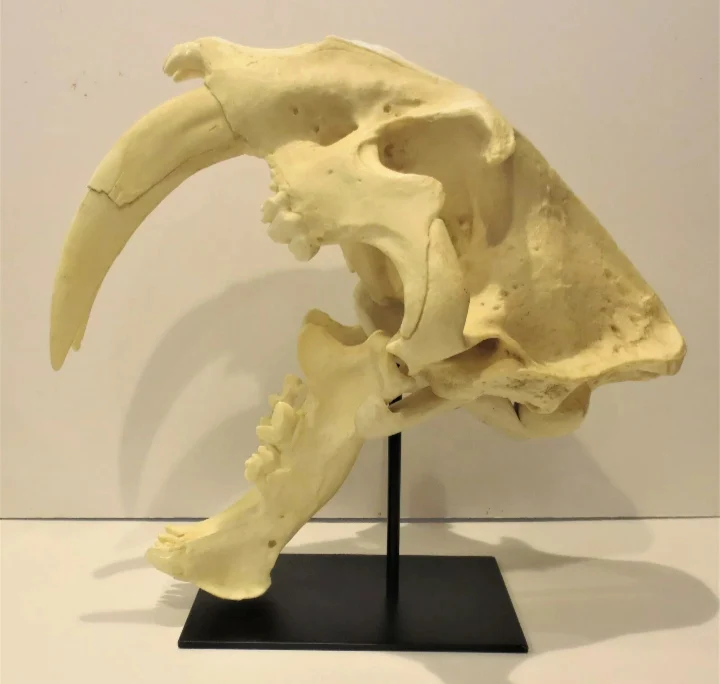
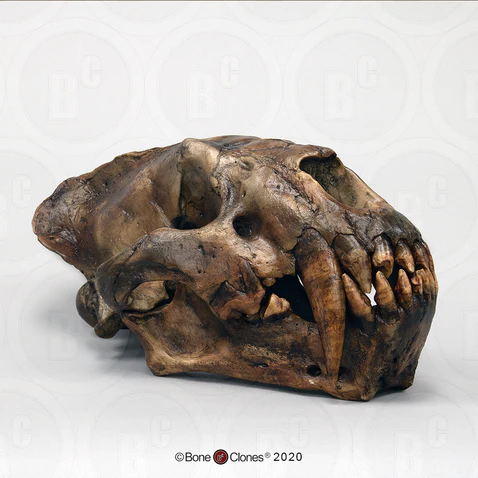
Sabertooth Cat, Xenosmilus hodsonae Skull
BC-113
$520.00
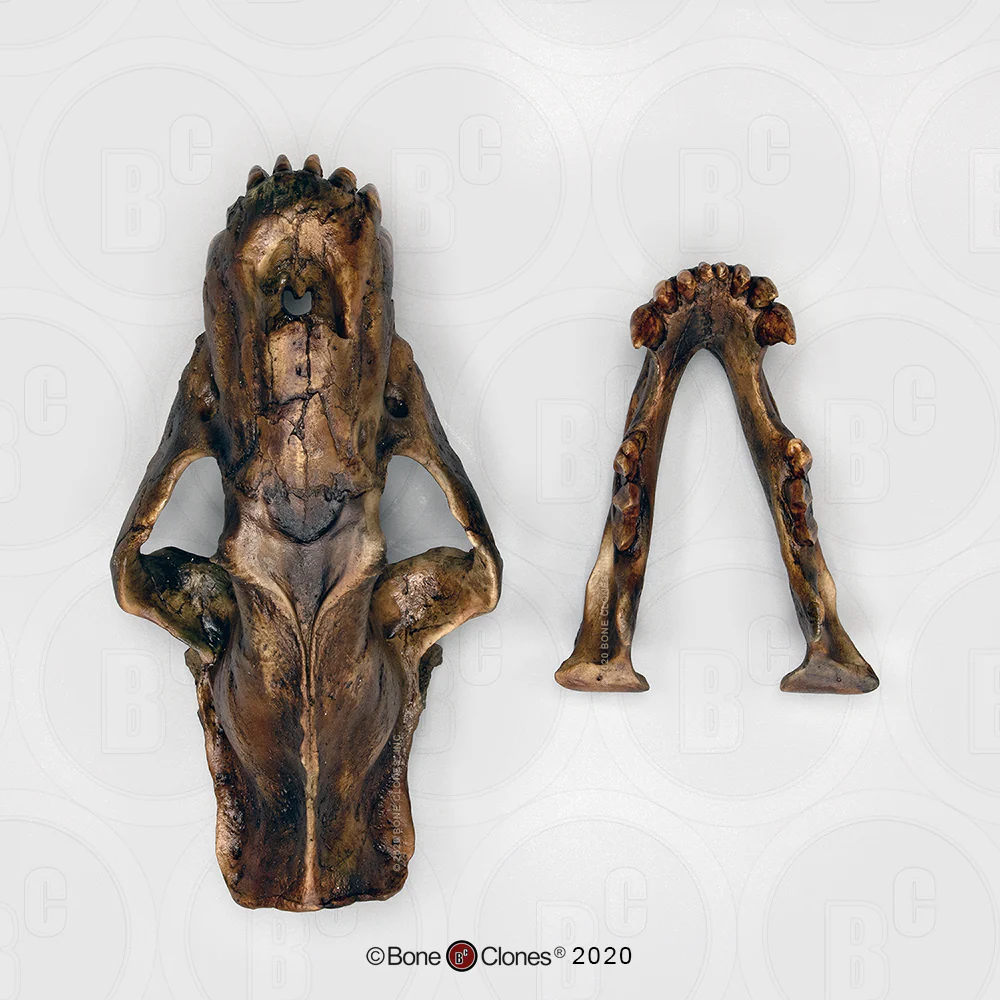
Occurrence: Pleistocene (Irvingtonian) In 1981, the remains of two specimens were found in the Haile limestone quarries in Alachua County, Florida. Rather than being a member of one of the two established groups of saber-toothed cats - Homotherium and Smilodon - in 1994, these specimens were suspected of representing a new genus, Xenosmilus hodsonae. This new genus combined the short, stout-legged features of the robust Smilodon with the scimitar teeth of Homotherium, resulting in a truly fearsome predator. The new feline had a bite even stronger than the Homotherium because of a longer sagittal crest and a larger temporalis muscle. We are grateful to the Babiarz Institute of Paleontological Studies for the opportunity to cast this individual. 2-part skull (separate cranium & jaw).
More Sabertooth skulls and skeleton casts at CatSkulls.com

Details & Craftsmanship
Every detail has been carefully considered to bring you the perfect product.
Details & Craftsmanship
Every detail has been carefully considered to bring you the perfect product.
Details & Craftsmanship
Every detail has been carefully considered to bring you the perfect product.
Description
Xenosmilus
Sabertooth Cat, Xenosmilus hodsonae Skull
BC-113
$520.00
Occurrence: Pleistocene (Irvingtonian) In 1981, the remains of two specimens were found in the Haile limestone quarries in Alachua County, Florida. Rather than being a member of one of the two established groups of saber-toothed cats - Homotherium and Smilodon - in 1994, these specimens were suspected of representing a new genus, Xenosmilus hodsonae. This new genus combined the short, stout-legged features of the robust Smilodon with the scimitar teeth of Homotherium, resulting in a truly fearsome predator. The new feline had a bite even stronger than the Homotherium because of a longer sagittal crest and a larger temporalis muscle. We are grateful to the Babiarz Institute of Paleontological Studies for the opportunity to cast this individual. 2-part skull (separate cranium & jaw).
More Sabertooth skulls and skeleton casts at CatSkulls.com